
22 Braided Ponytail Hairstyles Ideas That Will Transform Your Look
- Classic Sleek Braided Ponytail
- Dutch Braided Ponytail
- Fishtail Braided Ponytail
- Bubble Braided Ponytail
- Boho Braided Half-Up Ponytail
- Waterfall Braided Ponytail
- Braided Ponytail with Curly Ends
- Two Dutch Braids into One Ponytail
- Braided Ponytail with a Bouffant Crown
- Micro Braided Ponytail
- Braided Ponytail with a Wrapped Base
- Braided Ponytail for Curly Hair
- Braided Ponytail with Side-Swept Bangs
- Braided High Ponytail
- Braided Low Ponytail
- French Braided Ponytail
- Braided Ponytail with Beads
- Twisted Braided Ponytail
- Braided Ponytail with a Deep Side Part
- Braided Ponytail with Face-Framing Layers
- Braided Ponytail with a Slicked-Back Finish
22 Braided Ponytail Hairstyles Ideas That Will Transform Your Look
Braided ponytails have this magic ability to look put-together and low-key at the same time. One minute you’re running errands, the next you’re at a dinner reservation, and the same style works for both. That’s why this combo has stuck around season after season instead of fading out like so many other trends.
What makes braided ponytails so versatile is how many ways you can wear them. You’ve got sleek and polished versions, messy boho ones, styles loaded with texture, and options for basically every hair type out there. Whether your hair is fine, thick, curly, or somewhere in between, there’s a version on this list that’s going to work for you.
Grab your favorite hair ties, maybe a little dry shampoo, and let’s get into it.
Classic Sleek Braided Ponytail
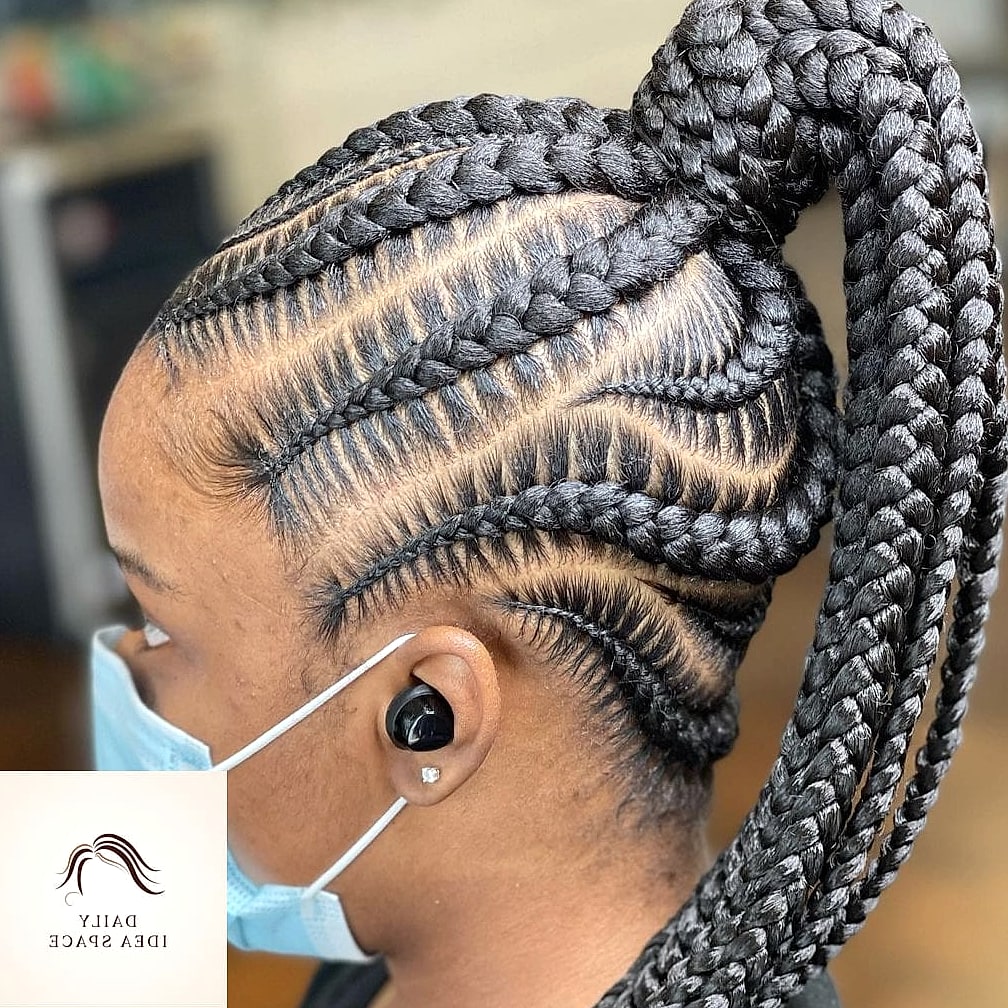
This is the one you picture when someone says “braided ponytail.” Hair pulled back tight, a single braid running down the length, and a finish so smooth it looks glossy under office lighting.
It suits pretty much anyone, though it looks especially sharp on medium to thick hair where the braid has some real substance to it. Straight hair gives the cleanest result here, but a flat iron can tame waves or curls if that’s what you’re working with.
People gravitate toward this look because it reads as polished without requiring an actual updo appointment. For styling, smooth back with a boar bristle brush, secure with a tight elastic, then braid and finish with a light-hold gel to control flyaways.
Maintenance is moderate since you’ll want to redo your edges daily to keep that sleek look going.
Dutch Braided Ponytail
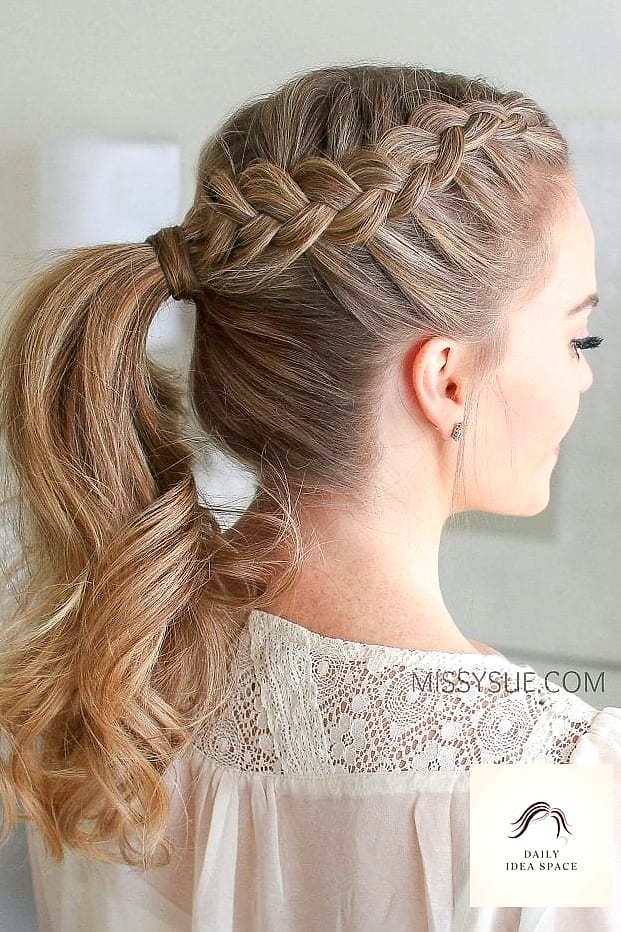
Instead of a regular braid, this version starts with a Dutch braid that sits on top of the hair rather than under it, giving you a raised, dimensional texture before it flows into the ponytail.
Anyone with medium to long hair can wear this, and it’s particularly forgiving for second or third-day hair since a little grip actually helps the braid hold its shape.
I love recommending this one to people who find French braids frustrating, because Dutch braiding tends to be a bit more intuitive once you get the hang of the underhand technique. Style it by braiding from the crown down to your desired ponytail height, securing, then letting the rest of your length hang loose or braided further.
It’s low maintenance for a braided style, lasting comfortably through a full workday.
Fishtail Braided Ponytail
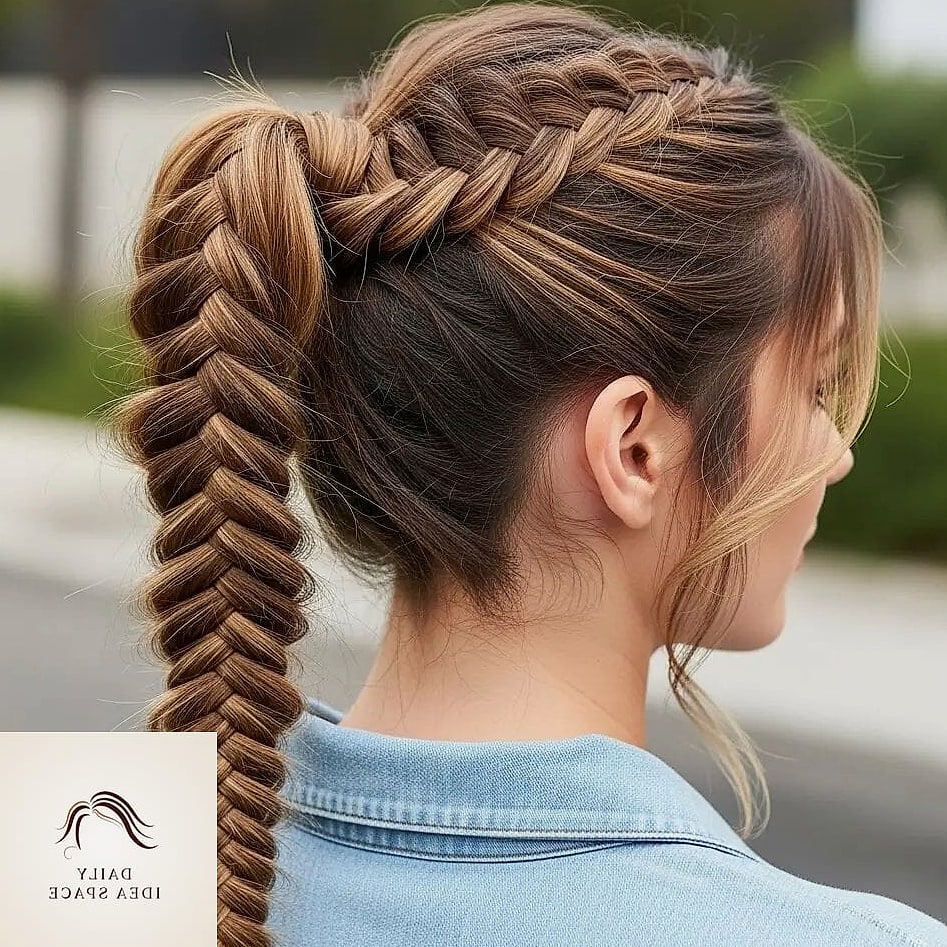
The fishtail braid brings a completely different texture to the table, with that signature herringbone pattern that looks intricate even though it’s honestly not that hard once you practice.
This style works beautifully on fine to medium hair since the smaller sections used in fishtail braiding create fullness that thin strands sometimes lack. Long hair shows off the pattern best, but you can absolutely do a fishtail on shoulder-length hair too.
People love this one for weddings and formal events because it photographs so well. To style, split your ponytail into two sections and cross small pieces from each side over to the other, repeating until you reach the ends.
Expect moderate maintenance, since fishtails can loosen up faster than three-strand braids.
Bubble Braided Ponytail
This trendy take uses small elastics spaced evenly down a regular ponytail, then gently pulls the sections between each tie to create rounded, bubble-like segments.
It’s a great pick for fine hair because the bubbles create the illusion of extra volume and thickness. It also works on any length past the shoulders, and honestly looks pretty fun on kids too if you’re doing a style for a little one.
The appeal here is that it feels playful and modern without being complicated to execute. Simply add small clear elastics every two to three inches down your ponytail, then pull the sides of each section outward to puff them up.
This style holds up well throughout the day, making it fairly low maintenance once it’s done.
Boho Braided Half-Up Ponytail
Not every braided ponytail needs to be pulled back completely. This half-up version keeps some face-framing pieces loose while the top section gets braided back into a ponytail, giving off relaxed, festival-ready energy.
It suits wavy or curly hair especially well since the loose strands add to that undone, romantic vibe. Fine hair can benefit too, since leaving some hair down avoids that flat, scraped-back look.
This is a favorite for outdoor weddings and summer events because it feels effortless rather than overly styled. Braid a small section from your crown, pull it into a half-up ponytail, then curl the remaining loose hair for extra texture.
Maintenance is low, and honestly, a little frizz only adds to the boho appeal here.
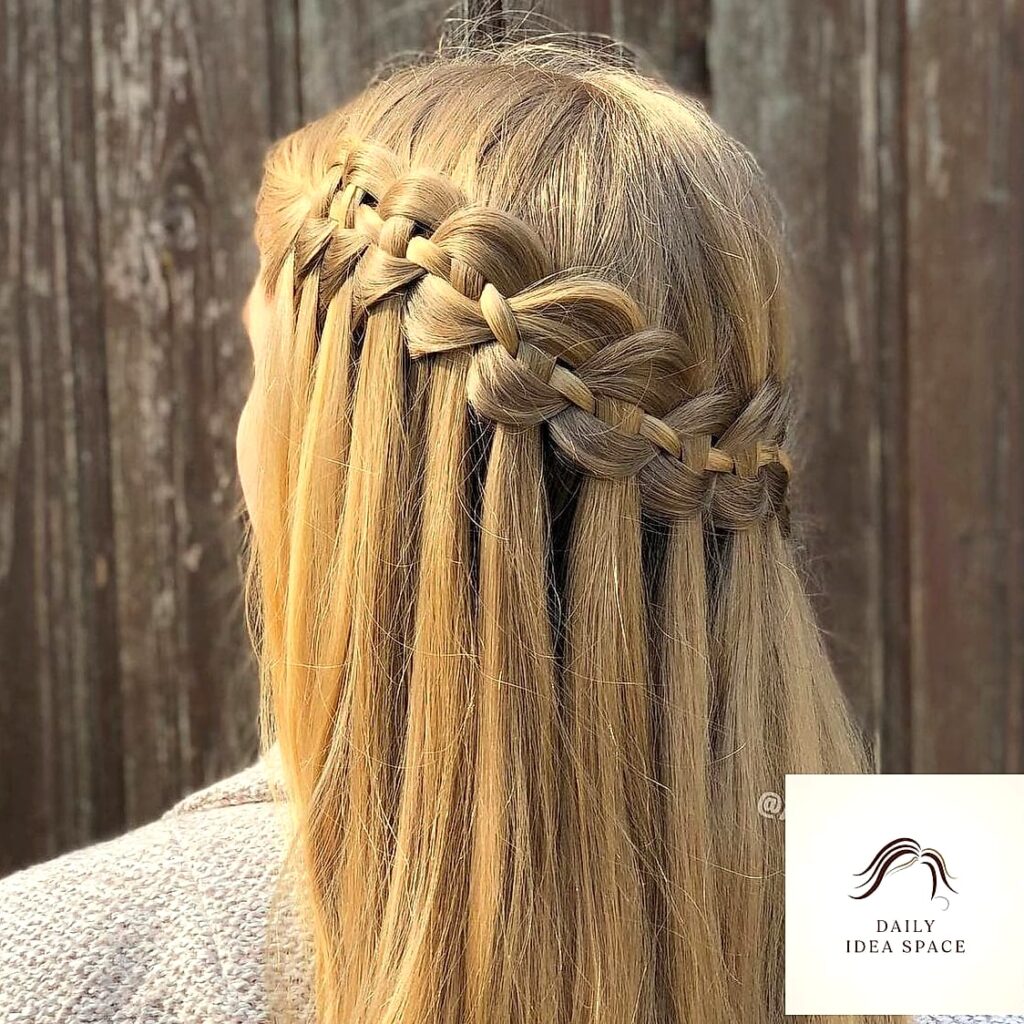
Waterfall Braided Ponytail
The waterfall braid is one of those techniques that looks way more complicated than it actually is. Sections of hair get released and left down as you braid, creating this cascading effect that looks stunning against a ponytail base.
Long hair with waves shows this off best since the released strands drape and curl naturally. It’s a lovely option for medium to thick hair too, since the technique creates visible layers of texture.
This look tends to be a go-to for bridesmaids and prom because it has that romantic, storybook quality. Start a French braid near your temple, but instead of adding the bottom strand each time, drop it and pick up a new piece, letting the hair fall into your ponytail.
It requires a bit of patience to learn, so maintenance leans moderate to high on the effort scale.
Braided Ponytail with Curly Ends
This one splits the difference between sleek and textured by keeping the braid itself tight and controlled while leaving the ends loose and curled with a wand or curling iron.
It works wonderfully on straight or slightly wavy hair since you get contrast between the smooth braid and the bouncy curls at the bottom. Medium to long hair shows the curls off best.
People like this because it feels a little more done-up than a plain braided ponytail without going full glam. Braid your ponytail as usual, leave the last few inches unbraided, then curl those ends away from your face.
Maintenance sits in the moderate range since curls can drop throughout the day, though a light hairspray helps them last.
Two Dutch Braids into One Ponytail
Starting with two separate Dutch braids from each side of the head and joining them into a single ponytail creates a cool, symmetrical look that’s a bit different from your standard single braid.
This suits thick hair particularly well, since combining two braids gives you plenty of volume at the base. It also works nicely for people with a center or side part who want definition on both sides of their head.
This look gets a lot of love because it feels a little edgier and more structured than a typical braided ponytail. Braid each side down to the nape, secure them together with an elastic, and let the rest of your ponytail hang straight or braided further.
Expect low to moderate maintenance, with the braids holding shape well through the day.
Braided Ponytail with a Bouffant Crown
Adding volume at the crown before braiding gives this style a retro, glam feel that works great for special occasions. Teasing the roots creates height, and then the rest gets pulled into a braided ponytail.
Fine or thin hair benefits enormously from this technique since the bouffant adds body that might otherwise be missing. It suits any length, though longer hair gives the braid more presence to balance the volume up top.
This is a popular pick for those wanting something with a little vintage glamour. Tease your crown section, smooth the top layer over it, then gather everything into a ponytail and braid the length.
Maintenance is moderate, and you’ll want a strong-hold hairspray to keep that height from collapsing.
Micro Braided Ponytail
Instead of one thick braid, this version uses several tiny braids gathered into a single ponytail, creating intricate texture and a slightly edgier finish.
Thick hair works particularly well here since there’s enough hair to divide into multiple small sections without each braid looking too thin. It’s also a great protective styling option for coily and curly hair textures.
People often choose this look because it adds visual interest without requiring extensions or added length. Section your hair into several parts, braid each one individually, then gather them all into a ponytail at your desired height.
This one takes longer to create but tends to hold up well, making it lower maintenance once it’s finished.
Braided Ponytail with a Wrapped Base
A simple but elevating detail, this style takes a small section of hair and wraps it around the elastic at the base of the ponytail before the braiding begins, hiding the hair tie completely.
This works on any hair type or length and is one of the easiest ways to make a basic braided ponytail look more finished. It’s especially nice for thinner hair where a visible elastic can look a little sparse.
I always suggest this trick because it’s such a small effort for a noticeably more polished result. After securing your ponytail, take a thin piece of hair, wrap it around the base, and pin it underneath before braiding the rest.
Maintenance is low, and it genuinely makes any of the other styles on this list look more refined.
Braided Ponytail for Curly Hair
Curly hair deserves its own spotlight here since braiding curls into a ponytail creates gorgeous natural texture without needing heat styling at all.
This suits coily, curly, and very wavy textures best, letting the natural pattern shine through the braid itself. Medium to long curly hair shows the most definition, though shorter curls can absolutely pull this off too.
This style is loved in the natural hair community because it’s protective while still looking intentional and stylish. Detangle with a leave-in conditioner, braid while hair is damp for the smoothest result, then let it air dry or diffuse.
Maintenance is low since curly hair tends to hold braided styles exceptionally well for days at a time.
Braided Ponytail with Side-Swept Bangs
Pairing a braided ponytail with soft, side-swept bangs framing the face softens the entire look, especially for anyone who finds a fully pulled-back style too severe.
This flatters round and square face shapes particularly well since the bangs add angles and soften strong jawlines. It works on straight or wavy hair with any length past the shoulders.
People request this combination often because it balances a sleek back section with something soft up front. Braid the ponytail as usual, then style your bangs separately with a round brush for a swoop.
Maintenance is low to moderate, mostly depending on how much upkeep your bangs personally need.
Braided High Ponytail
Taking a braided ponytail up high on the crown instead of at the nape instantly changes the whole vibe, giving it a youthful, energetic feel that’s popular for workouts and nights out alike.
Any hair type can wear this, though fine hair especially benefits from the high placement since gravity works in your favor for extra lift. It suits oval and heart-shaped faces beautifully.
This look is a favorite because it’s quick, practical, and still looks intentional rather than thrown together. Gather hair at the crown, secure tightly, then braid the length, finishing with a small section wrapped around the base.
Maintenance is low, making it a genuinely great everyday option.
Braided Low Ponytail
The opposite of the high version, a low braided ponytail sits at the nape and brings a more mature, refined energy that works beautifully for professional settings.
This flatters most face shapes and works particularly well on thick or coarse hair, which sometimes looks better weighed down rather than pulled tightly upward. Straight to wavy textures give the cleanest result.
This is often the choice for job interviews or client meetings because it looks intentional without feeling flashy. Gather hair low at the nape, smooth with a brush, secure, then braid the length loosely or tightly depending on your preference.
Maintenance is low and it tends to hold its shape well throughout a long day.
French Braided Ponytail
A French braid running from the crown down into a ponytail gives a slightly more textured, dimensional look compared to a braid that starts at the base.
This suits medium to thick hair especially well since French braiding needs enough hair to grab as you go. It’s a great option for those with layers, since the technique helps blend shorter pieces into the style.
This one’s popular because it looks a bit more elevated than a plain braided ponytail while still being achievable at home. Start braiding at your hairline, adding hair from both sides as you move toward the crown, then continue into a regular braid down the ponytail.
Maintenance is moderate, especially in the first few hours as the braid settles.
Braided Ponytail with Beads
Adding beads along the length of a braided ponytail brings texture, color, and a bit of personality that plain braids don’t offer on their own.
This style is especially popular and protective for coily and curly hair textures, though it can be adapted for any hair type. It works on medium to long hair where there’s enough length to accommodate the beads comfortably.
People love this look for how customizable it is, since beads come in endless colors and sizes to match personal style. Braid your ponytail as usual, then thread beads onto small sections near the ends, securing with small knots or clasps.
Maintenance is low once installed, though the beads themselves need occasional adjusting.
Twisted Braided Ponytail
Combining two-strand twists with a traditional braid creates a chunkier, more textured rope-like effect that stands out from typical smooth braids.
This works wonderfully on thick and coarse hair, which holds the twisted shape nicely and creates visible definition. Curly and coily textures also take to this style beautifully.
This look has grown a following because it offers something visually different from the usual three-strand braid. Divide your ponytail into two sections, twist each one individually, then twist them together around each other down the length.
Maintenance is low to moderate, and the twists tend to hold their shape for a couple of days.
Braided Ponytail with a Deep Side Part
Switching your part to a deep side dramatically changes the frame of your face and pairs beautifully with a sleek braided ponytail for a more editorial, fashion-forward look.
This flatters round faces especially well by creating asymmetry and visual length. It works on straight to wavy hair of any length past the collarbone.
This combination shows up a lot on runways and in magazine spreads because it feels a little more high-fashion than a centered part. Create a deep side part with a comb, smooth the hair back on both sides, then gather and braid into your ponytail.
Maintenance is low, though you may need a bit of gel to keep the part crisp.
Braided Ponytail with Face-Framing Layers
Leaving a few shorter, face-framing layers out of the ponytail softens the overall look and adds movement around the face while the rest stays braided back.
This works particularly well for anyone who’s had a haircut with layers already, since it makes use of pieces that might not fully pull back anyway. It flatters oval, heart, and square face shapes by softening angles.
This style is a solid go-to because it feels more effortless than a completely scraped-back braid. Section out your face-framing pieces before gathering the rest into a ponytail, then curl those loose strands lightly for extra softness.
Maintenance is low, and the loose pieces can be touched up throughout the day with a curling wand if needed.
Braided Ponytail with a Slicked-Back Finish
For those days when you want maximum sleekness, this version uses gel and a fine-tooth comb to slick every strand back before braiding, creating a wet-look finish that’s become a red carpet staple.
Straight hair works best here since it’s easiest to smooth completely flat. Fine to medium hair also cooperates well, though thicker hair can work with enough product.
This look is loved for how modern and polished it feels, especially paired with bold makeup or statement earrings. Apply a strong-hold gel throughout damp hair, comb back thoroughly, secure into a ponytail, then braid tightly.
Maintenance is higher than most styles on this list since you’ll likely need to reapply gel to tame regrowth throughout the day.
Twenty-two braided ponytail hairstyles later, hopefully you’ve found a few that feel like exactly what you’ve been looking for. The beauty of braided ponytails is that they flex to fit your hair type, your schedule, and whatever occasion you’ve got coming up, whether that’s a Tuesday grocery run or someone’s wedding.
My honest advice is to start with whichever style matches your current skill level, then build from there. A basic braided ponytail today could easily turn into that waterfall braid or bubble ponytail next month once you’ve got the fundamentals down.